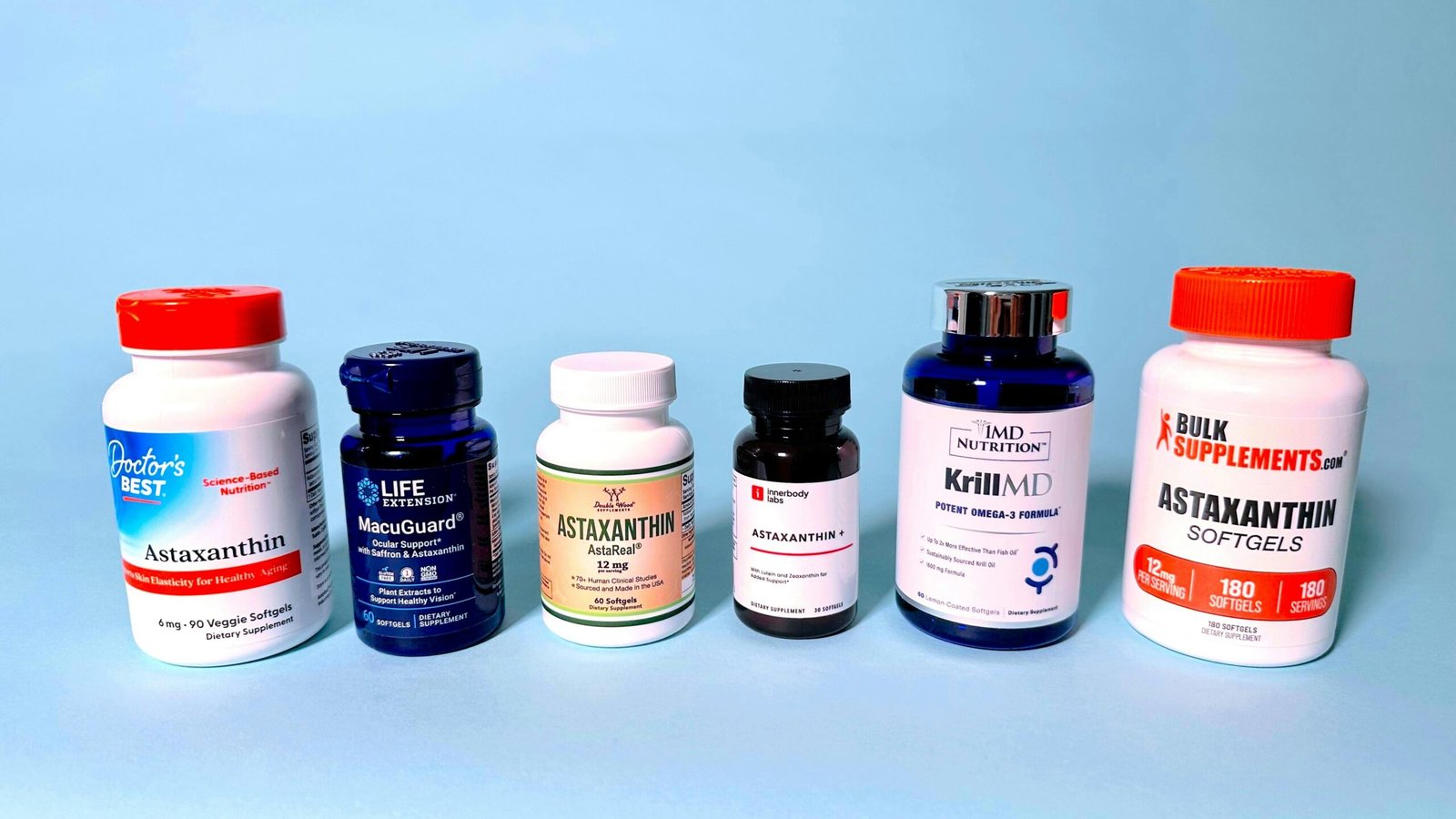
Astaxanthin has gone from a niche biohacker supplement to a genuinely popular antioxidant, but the market is crowded with products that vary wildly in quality. If you’re trying to find the best astaxanthin supplement, here’s what actually separates a good product from a weak one — and what to look for before you buy.
What Is Astaxanthin?
Astaxanthin is a naturally occurring red pigment found in certain algae, as well as in salmon, trout, krill, and shrimp. It’s known primarily for its antioxidant and anti-inflammatory properties, and has been studied for potential benefits related to skin health, eye health, and general cellular protection against oxidative stress.
The Most Important Factor: Natural vs. Synthetic
This is the single biggest thing to check before buying. Natural astaxanthin, sourced from the microalgae Haematococcus pluvialis, contains a specific isomer configuration that matches what’s actually been used in published human clinical trials. Synthetic astaxanthin, made through petrochemical synthesis, has a different isomer mixture and is mostly used in fish farming to color farmed salmon — it doesn’t have the same clinical research behind it.
How to check: the label should clearly state the source. Look for phrasing like “Haematococcus pluvialis extract,” or a recognized branded ingredient such as:
- AstaReal® (Fuji Chemical / Swedish Algae Factory)
- BioAstin® (Nutrex Hawaii)
- AstaPure® (Algatechnologies)
If a label just says “astaxanthin” with no source disclosed, that’s a red flag worth avoiding.
Dosage: What the Research Actually Supports
Most human clinical research on astaxanthin uses doses in the range of roughly 4–12 mg per day, particularly in studies looking at skin elasticity, hydration, and antioxidant markers. Products with dramatically lower doses may not reflect the amounts actually studied, so it’s worth checking the per-serving milligram count rather than assuming all products are equivalent.
Purity and Third-Party Testing
Astaxanthin supplements have had documented quality issues in the past, with independent testing organizations finding some products containing far less astaxanthin than advertised. Look for:
- Third-party testing or certification (ConsumerLab, NSF, USP, or similar)
- No unnecessary fillers or artificial additives
- A transparent oil carrier (astaxanthin is fat-soluble, so it’s typically delivered in an oil-based softgel)
Price Doesn’t Always Reflect Quality
Independent lab testing has found that astaxanthin content can cost more than double from one brand to another for the same actual amount of astaxanthin, with no clear quality difference to justify the higher price. Comparing cost per milligram, rather than price per bottle, is a more reliable way to evaluate value across brands.
What to Look for in a Buying Checklist
- ✅ Source clearly labeled as natural, ideally Haematococcus pluvialis
- ✅ Recognized branded ingredient (AstaReal®, BioAstin®, AstaPure®) or clear extraction sourcing
- ✅ Dosage in the 4–12 mg range per serving, matching clinical research
- ✅ Third-party testing or purity verification
- ✅ Reasonable cost per milligram compared to other natural options
- ✅ No vague labeling that hides whether the source is natural or synthetic
A Note on Athletic Performance Claims
If you’re considering astaxanthin specifically for exercise performance or recovery, it’s worth tempering expectations. A recent review of numerous randomized trials found some signals for certain recovery biomarkers, but no significant improvement in measures like VO2 max, time-trial performance, or power output. Realistic expectations matter more than marketing claims here.
Bottom Line
The best astaxanthin supplement isn’t necessarily the most expensive one — it’s the one with a clearly disclosed natural source, a dose that matches what’s actually been studied (roughly 4–12 mg/day), and independent purity verification. Skip anything with vague labeling or no disclosed source, and compare cost per milligram rather than sticker price to get the most value for your money.
This is general product-buying information, not medical advice — if you have a specific health condition or take other medications, it’s worth checking with a doctor or pharmacist before starting any new supplement.